CASE STUDIES / SUCCESS STORIES |
CASE STUDY-1
NEED BASED INTERVENTION WORKS VERY WELL.
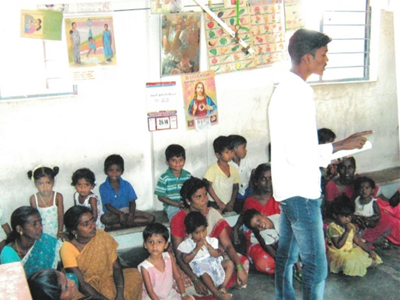
The case is related to the severely malnourished children of the village Anukunda of Gumma Block where the incidence of the malnourishment is high in comparison to other Panchayats. Mothers do not realize the importance of nutrient value of the locally available green and leafy vegetables. . They give more importance to their livelihood than the nutrition. What is available in the kitchen garden is being sold in market. They do not take adequate amount of nutritious food in their regular meal. Hence, the increased number of malnourished children is in that particular area. Aiswarya Missal is one of the malnourished children who took birth on 14-03-07 with a weight of 1kg. She was in Grade IV. This fact came to the notice of the AWW and APC of the sector concerned during the joint visit. The mother of the child was then counseled on the importance of sick and weak New Born care. Focus was on the extra care for weak new born. Visits were increased during the critical contact period. However, the situation has been improving because of the increased number of contacts during critical period and complimentary feeding period. Capacity buiding was on the ACF. Follow ups have been taken during the joint visits and sector meetings. Attention was paid to target the beneficiary on the Scheduled NHDs and immunizations. Intensive counseling was on the EBF,ACF and regular growth monitoring of the child .In-laws of the family were also counseled as to the importance of Pediatric IFA ,ACF and initiation of complimentary feeding at right time. Regular attention was given to the child on ground of survival because of the fact that the Doctor gave his consent on the impossibility of the survival of the child because of low birth weight and severely malnourished. The mother had also lost his hope on the child as soon as he listened the word on the uncertainity of survival of her daughter. But in due course of time the need based counseling gave much confidence in her and she began to smile with the gradual improvement of the child in its growth.
 | CASE STUDY-2
U. Brundavati is a 20 year old woman from New Kerandi village in Gosani Block, Gajapati District. Brundavati was born with MR. To her already 6 member family, the addition of Brundavati was a burden. This burden was further increased by the presence of Brundavatis’ disability.
Brundavatis’ brother, an auto rickshaw driver, provided the sole income for the family. Brundavatis, seen as unable to work, sat idle in the home. One day, Brundavatis’ brother had an accident and suffered with OH. Without any livelihood support, the family now faced financial trouble.
As a member of Ramalingeswari Disability Rights Group (DRG), Brundavatis’ situation came to light. During the network meeting, the members recognized the need for | livelihood support for the family and decided to offer credit of Rs. 10000/- to Brundavati. Unfortunately, because of her MR, she was unable to go ahead with income generation activities. The network members motivated her brother to open a shop by selling his Auto Rickshaw. He agreed with the suggestion of the network. With the support of Rs. 10000/- from CCD and Rs. 15000/- from Brundavatis’ brother Rs. 25,000/- were collected to start a grocery shop in the village.
From the support of the DRG and CCD, Brundavatis’ family now receives Rs. 500/- to 600/- daily with a net profit of Rs. 100/- to 150/-. The family members are now getting income options and are proud of Brundavati. Her father and brother say that “Brundavati is physically idle but our family is getting livelihood options from her. We are thankful to CCD and SAMARTH Network who are creating rehabilitation opportunities for the PWDs.”
|
CASE STUDY-3
M. Mallana, S/o. M. Venket Rao, aged about 42, resides at Totagumuda village in Madhusudanpur gram panchayat of Gosani Block. Mallana is physically disabled due to Polio. Due to his disability, Mallana was unable to provide any income source to support his 3 children and wife. Mallana was unable to provide even the most minimum needs to his children. He realized the burden his disability was to the family’s livelihood as he sat idly and discouraged each day.
Through the encouragement of CCD, Mallana was enrolled in the Jagannath DRG. The group consists of members from different villages under the same panchayat. After enrolling in the DRG, Mallana began attending monthly network meetings. During the meetings, he expressed his financial problems and voiced his interest to start a tailoring business, as he |
already had experience and skills with tailoring. Considering his skills, the network members decided to provide credit support of Rs. 10000/- to help Mallana start a tailoring shop in his house. Mallana was happy with the decision of the network. He contributed Rs. 1000/- and purchased a tailoring machine and accessories. The villages and nearby villagers now go to Mallana for stitching needs. Mallana works hard and is now receiving a profit of Rs. 100/- in an average day. Because of the support of CCD and the DRG network, Mallana is now happy and able to provide support to his family and good education to his children. Mallana says that “if some one is having skill and zeal, then he can be self reliant even though he is a disable.” Today, Mallana is an inspiration to other PWDs to be self reliant rather than dependent on the sympathy of others. |  |
| CASE STUDY - 4 | 

 |
Sanitation and good health is possible through community efforts
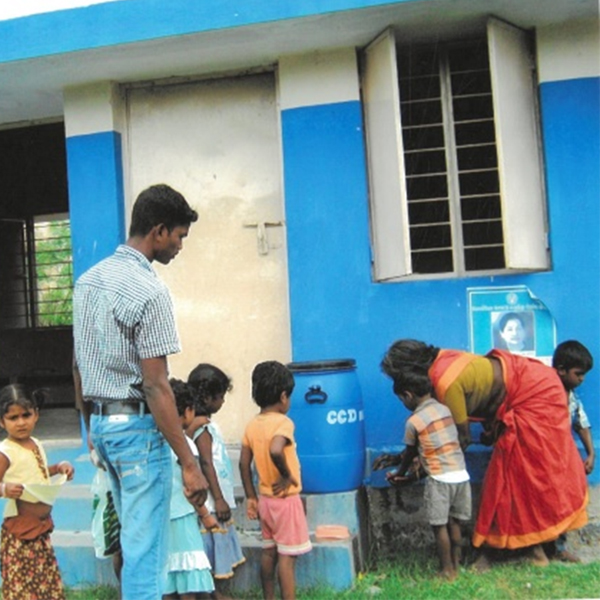
Antartang is one of the remote tribal village in Gumma block of Gajapati district. The village is 4 KMs away from Gumma block and 30 KMs away from district head quarter. The total 29 tribal households (BPL – 5 HH and APL-24 HH) are residing in the village with minimum infrastructure facility. Communication (all weather road and electricity) was mere a dream to the village. They were situated in hilly terrains and remote areas. Prevalence of diarrhea, dysentery, cholera, Gastro enteritis, malaria, skin diseases were very common in the village. Always they suffer from common water borne and water related diseases due to open defecating, use unsafe water, unhygienic practices etc.. Due to inaccessibility they could not access the govt. service facility adequately ,After continuous and constant effort of CCD they could realize the problem of unhygenic and unhealthy practices which are causing for the prevalence of many diseases and tried to take up sanitation project in the village but they could not achieve the target because of govt. norms only BPL category are able to get Govt Support for construction of toilets/latrines facility . But they thought in such situation they could not achieve the target of total sanitation.
CCD has mobilized from Orissa Tribal Empowerment and livelihood programme (OTELP) to promote the complete sanitation facility for each household and in common place which is used by at least 4 – 5 landless households those who have not proper space for construction of latrines. The community is also interested to take up the project with their own decision as well as their own community contribution. After completion of sanitary latrine in all households, the people especially the women member are relaxed from open toilet and bathing. The community is maintaining the latrines and bathrooms by themselves. Previously the community members are going outside like streams, canals, nalas which was not gender and disable friendly environment. But now the women and disable members are using their individual bathrooms and latrines.
Now the villagers especially women and adolescent are happy with healthy and friendly environment with safe health practices. The community of the village is encouraging the nearby villages for effective sanitation aspects. Use of separate latrines, garbage pit, smokeless Chula changed the behavior communication aspects of the community and the habit is now widespread in nearby villages for total sanitation measures with the support of CCD / OTELP as well as convergence. The health hazards like diarrhea, colera, skin diseases, dysentery and other pestiferous diseases is reduced because of hygienic practices by the community. As per the technical estimation for construction of a latrine is Rs. 10190/-. The project cost supported by CCD/OTELP is Rs. 4500/-. The remaining cost is being contributed by the community is Rs. 5690/-. |
CASE STUDY - 5
With the support of Sight Savers and facilitation of Inclusive Education facilitators of CCD, it was possible to encourage and continue the education in general schools of two visually impaired children namely Mr. Sagar Dholia and Ms. Barsa Dholia of Garabandha village of Gosani Block.
Mr. Sagar Dholia and Ms. Barsa Dholia, the son and daughter of Mr. Deepak Dholia, resident of Garabandha village, Gosani Block in Gajapati District. Both children are visually impaired. They are belonging to schedule caste / Dalit. Mr. Deepak is a daily wage worker and his wife is doing vegetable vending. Their daily income is not more than Rs. 50/-. Due to poverty, vulnerability and both the children are disabled; Due to lack of encouragement from other members Deepak discontinued his children from education. Many negative thoughts incorporated in his mind towards education of their VI children also a girl child.
After intervention of CCD with the support of Sight Savers, two IE facilitators identified the children and started counseling their parents to send their children into school. But earlier they have joined in a school which is more than 7 km from their house and it was difficult to attend regularly in the school. The IE facilitators contacted with the school authorities and Inspector of Schools to rejoin the two visually impaired children in the nearby school.
BDO, Gosani has provided the educational devices and supportive aids and appliances to the children and encouraging them to continue their education. The children are leaning Braille from the IE facilitator of CCD. Now the two children are going to school and other members of their village started cooperating and encouraging them for their efforts and endeavours. Mr. Deepak Dholia and their two children are now very happy and also they are thankful to the support of Sight Savers and CCD for the advocacy for getting income certificate and scholarship. |

 |
CASE STUDY - 6
|
 | Muna Nayak is a physically disabled (Polio victim since childhood) is a active member of Pragati DRG of Paralakhemundi and also a member of SAMARTH. Being a member of SAMARTH DPO he got the orientation, encouragement and micro credit support to improve his livelihood. In a big family of 6 members, Muna is a elder son and taking all responsibilities of his family. He is now supporting financially as well as morally to his family. Even though polio affected, he is getting good recognition from his friends and officials for his obligation and friendliness behaviour.
Muna is having 2 sisters and a younger brother. His father is a daily labour and it is difficult on part of him to maintain their big family. As a elder brother, Muna was helpless to support his family. Due to his illiterate parent, Muna is also forced to discontinue his education after 3rd standard. He left his study and decided to earn money and support his family.
His father approached before CCD to provide some support to Muna as he is a member of SAMARTH DPO. Muna is also placed his opinion in monthly network meeting of SAMARTH. He showed his interest to start a pan shop at Paralakhemundi to get daily income. He placed his complete plan that he maintain the pan shop and his brother will support him to purchase necessary items for the shop. Time to time, his father also support in his business. After hearing the plan and their interest, SAMARTH has decided to provide him micro credit worth of Rs. 5000/- from the revolving fund. He started his business and with sincere efforts, he could repay the money in 8 month period. He got the technique of earning money. He again requested for more micro credit. During the year 2009, SAMARTH has provided direct support of Rs. 10000/-. He also contributed Rs. 3500/- for purchase of freeze for the pan shop. Side by side he also started a tea stall in front of his pan shop. With his commitment and friendly behaviour, the customer increased day by day. He earned money and repay to SAMARTH network with interest.
Now he is earning net profit of Rs. 250/- per day and supporting his family. His father and other family members are supporting Muna in his daily work. Other friends are also encouraging Muna for his self esteem. As a elder son, he is taking all responsibility of his house and living a secure life in the society.
|
| |